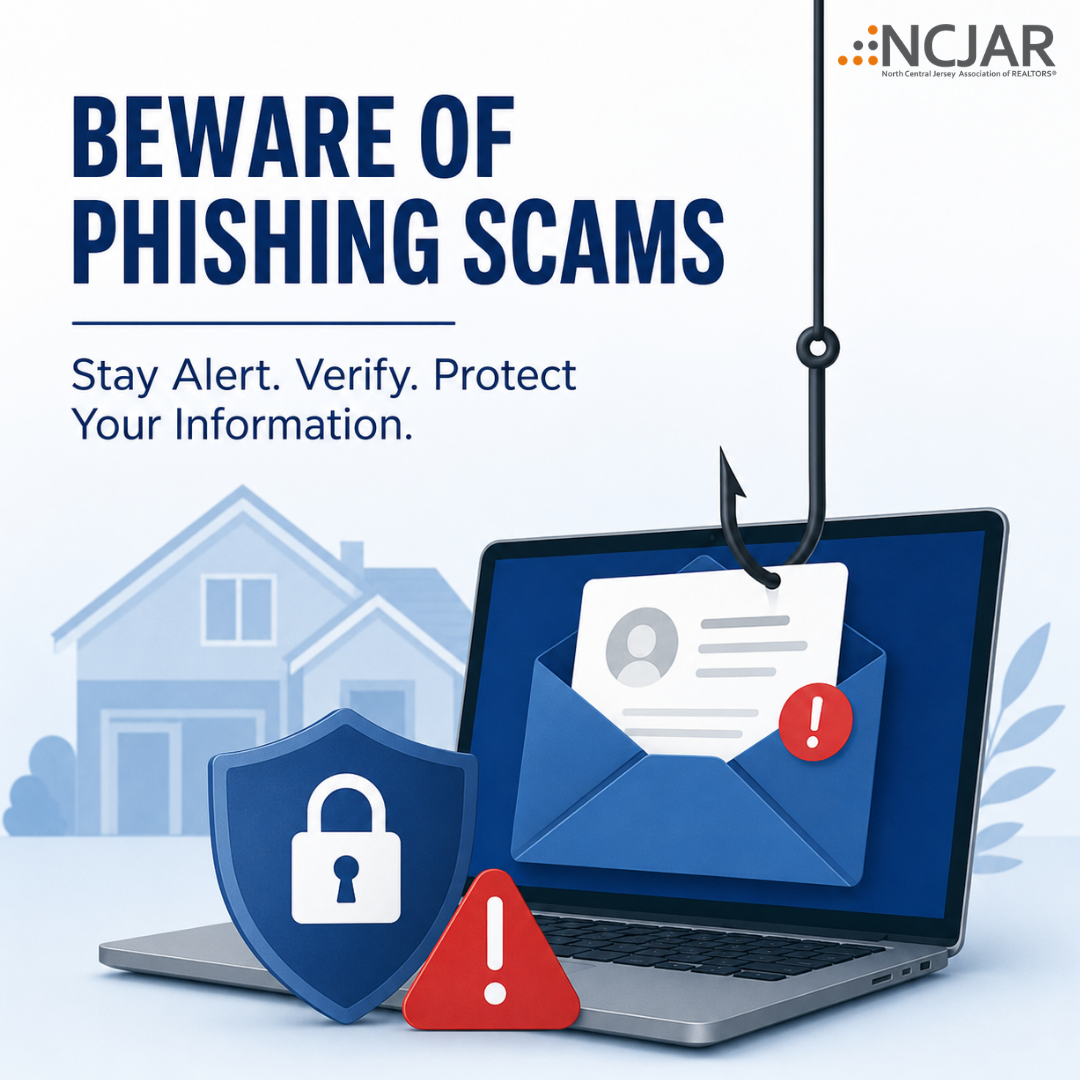
 Phishing scams continue to target consumers and businesses—including real estate professionals. These scams often use fake emails, text messages, or phone calls that appear to come from trusted organizations in an attempt to steal passwords, financial information, or other sensitive data.
Because real estate transactions involve confidential information and the transfer of funds, REALTORS® should remain vigilant and help clients recognize potential scams.
Know the Warning Signs
Be cautious if you receive a message that:
- Creates a sense of urgency or pressure to act quickly
- Requests personal, financial, or login information
- Includes unexpected links or attachments
- Comes from an unfamiliar or suspicious email address
If something doesn't seem right, don't click. Verify the request by contacting the organization directly using a trusted phone number or official website.
Protect Yourself and Your Clients
Follow these simple best practices:
- Never send passwords or sensitive financial information by email or text.
- Always verify wiring instructions by phone before transferring funds.
- Enable multi-factor authentication whenever available.
- Keep your devices and security software up to date.
- Talk with your clients about wire fraud and phishing risks early in the transaction.
A few extra minutes of verification can help prevent costly fraud and protect everyone involved in the transaction.
For additional tips and guidance, visit the New Jersey Department of Banking and Insurance's Phishing Information page:
