 As real estate professionals, we have a responsibility to understand—and comply with—the laws and regulations that govern our business. Some requirements are not matters of personal preference, office policy, or "best practice." They are legal obligations.
Two of the most important are buyer agency agreements and seller property disclosures.
Buyer Agency Agreements: A Legal Requirement
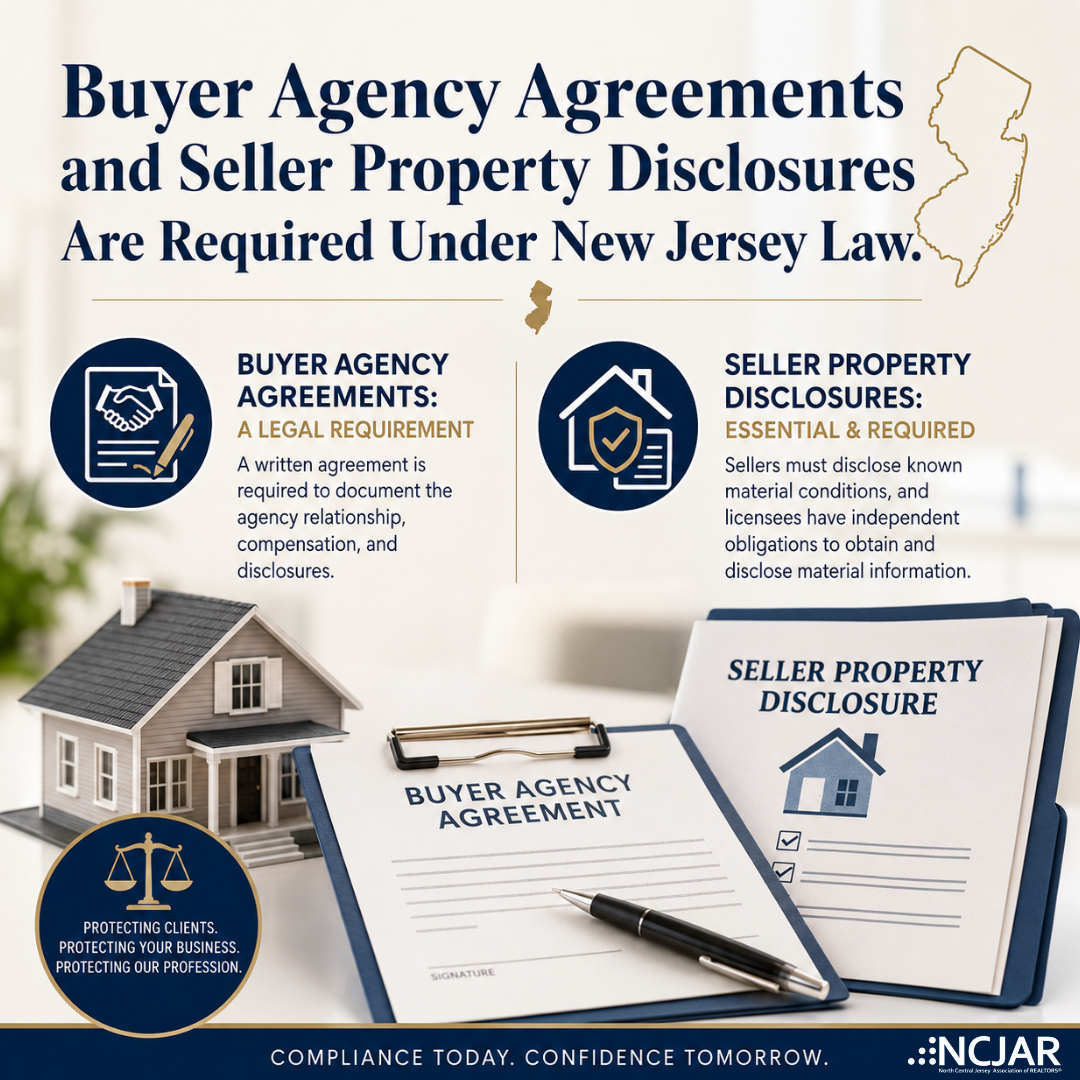
New Jersey law now requires brokerage services to be governed by a written brokerage services agreement. When a brokerage firm represents a buyer, the agency relationship, compensation terms, and required disclosures must be documented in writing. The agreement must include the New Jersey Real Estate Commission's Consumer Information Statement and clearly disclose the agency relationship before or at the time the brokerage services agreement is signed.
This is more than paperwork—it establishes who you represent, defines your fiduciary duties, and provides transparency for the consumer.
Every REALTOR® should ensure that buyers understand:
- Who represents them.
- The scope of the representation.
- How compensation is addressed.
- Their rights and responsibilities under the agreement.
Failure to properly document the agency relationship can expose both the licensee and the brokerage to unnecessary regulatory and legal risk.
Seller Property Disclosures Matter
While New Jersey follows the principle that sellers must disclose known material conditions affecting the property, licensees also have independent obligations under New Jersey law.
The New Jersey Real Estate Commission requires licensees to disclose material defects that a reasonable inspection by the licensee would reveal and to make reasonable efforts to obtain material information concerning the condition of properties they are listing or representing.
Seller disclosure forms are an essential part of this process. They help:
- Inform buyers before they make purchasing decisions.
- Reduce misunderstandings and post-closing disputes.
- Promote transparency throughout the transaction.
REALTORS® should encourage sellers to complete disclosure forms accurately and completely. The disclosure is the seller's statement—not the agent's—and should never be completed or altered by a licensee on the seller's behalf.
Professionalism Begins With Compliance
Consumers rely on REALTORS® to guide them through one of the most significant financial decisions of their lives. Following New Jersey statutes and the rules and regulations of the New Jersey Real Estate Commission is fundamental to that responsibility.
Now is an excellent time to review your office procedures and transaction files to ensure every representation begins with the required documentation and every listing includes appropriate seller disclosures.
The bottom line is simple: Buyer agency agreements are required under New Jersey law when providing buyer representation. Seller property disclosures are an essential legal and risk-management component of every transaction. Compliance protects your clients, your brokerage, your license, and the reputation of our profession.
This article is provided for educational purposes only and is not legal advice. REALTORS® should comply with the New Jersey Real Estate License Act, the regulations of the New Jersey Real Estate Commission, and their brokerage's policies and procedures.
